

How to Hire a Custom Home Builder
/
A beautifully designed home is only as good as its execution. The precision of the millwork, the way stone meets cabinetry, the transitions between materials—these are the details that distinguish exceptional construction from work that merely looks impressive in photographs. Choosing the right custom home builder means looking beyond the portfolio and the proposed construction price. You need a builder with the technical expertise to execute your architect's vision, the subcontractor relationships to maintain quality, and the management systems to protect your investment.
At Gerry Homes, we've delivered more than 70 homes, with 12 additional new homes currently under construction. Through that experience, we've learned that the most revealing questions aren't necessarily about how many homes a builder has completed, but how they approach craftsmanship, manage complications, and communicate throughout construction.
Here are the considerations I would prioritize when selecting a custom home builder in Seattle or the Eastside.
Evaluate Craftsmanship and Architectural Execution
Portfolio photographs are a useful starting point, but I strongly recommend seeing a builder's work in person whenever possible. Ask to tour a completed home. If the builder can arrange it, visit an active construction site as well. When touring a finished home, don't evaluate only whether you like the architectural design. Look closely at the quality of the construction.
Examine how trim meets the walls, the precision of tile installations, the alignment of cabinetry, and the transitions between different materials. These details reveal the level of care taken during construction. For homeowners building a fully custom home, it's particularly important to evaluate whether the builder can faithfully execute the architect's vision. A beautifully designed residence depends on the precision of its construction, especially when the architecture includes complex details, custom millwork, and carefully integrated materials.
A Closer Look: Mercer Island Sanctuary
At Mercer Island Sanctuary, the interior designer envisioned a fireplace surround fabricated entirely from marble, framed by custom cabinetry on either side. Executing the design required careful coordination. The marble, cabinetry, surrounding drywall, enclosed fireplace, and venting all needed to integrate into one cohesive installation. Each involved different trades, and the transitions between their work had to be resolved before the finished materials came together. We worked closely with the designer and our tradespeople to coordinate those details while preserving the intended design.
The finished fireplace is the focal point of the living room. Its seamless appearance is the result of careful planning and execution—precisely the kind of work homeowners should look for when evaluating a builder's craftsmanship.
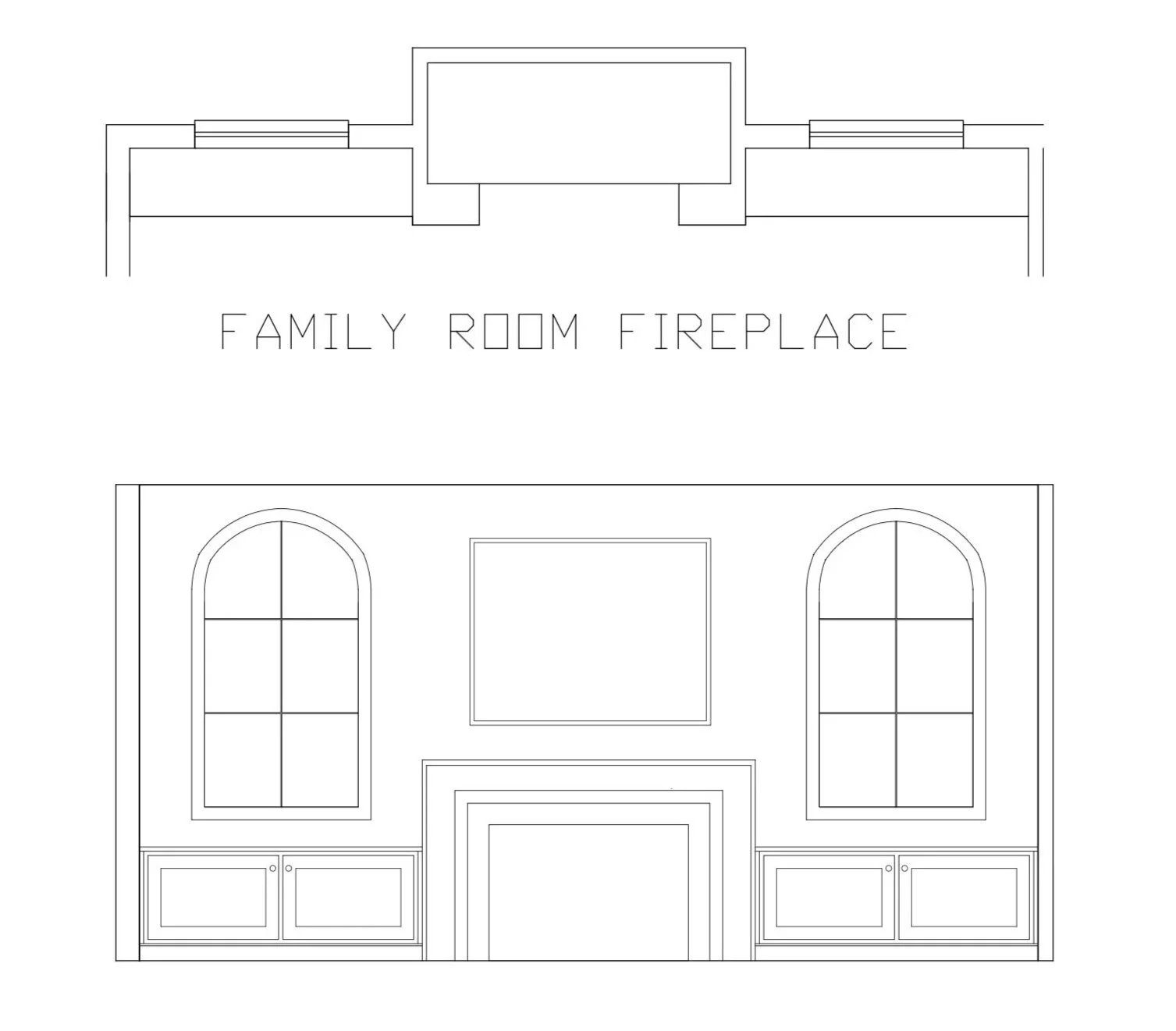
Original interior design elevation for the custom marble fireplace surround at Mercer Island Sanctuary.

The completed marble fireplace surround at Mercer Island Sanctuary, integrating custom cabinetry, stonework, and fireplace components into a cohesive design.
How to Evaluate a Builder's Work
Ask to see a completed project with a level of architectural complexity and finish quality comparable to what you're planning. Pay attention to how carefully the details have been executed. If something catches your attention, ask the builder about it. There may be a reasonable explanation, but how they respond can tell you something about their knowledge and accountability.
For historic or architecturally significant properties, the evaluation should also consider how the builder approaches existing craftsmanship. A substantial renovation of a Queen Anne Craftsman or Capitol Hill Foursquare, for example, requires sensitivity to the relationship between original architectural details and contemporary improvements. Ask to see comparable restoration or renovation work and discuss how the builder preserved the home's character while integrating new construction.
It's also worth understanding how the builder works with architects and interior designers when construction challenges arise. Ask how details are coordinated, what happens when modifications are necessary, and how decisions are made to protect the original design intent. A good builder should have the technical knowledge, skilled trades, and attention to detail to execute sophisticated designs—not simply look for ways to make challenging details easier.
Choose a Builder With Experience in Your City
One of the first questions I would ask a prospective builder is whether they've completed construction projects in the jurisdiction where you plan to build. Every city has its own processes and requirements for new construction and major renovations. Seattle, Bellevue, Kirkland, and Mercer Island share many similarities, but each has its own rules and nuances. A builder who has already worked through the permitting and construction process in your city is better positioned to anticipate those differences.
This doesn't mean they need to have built 15 homes in the jurisdiction. But I would prefer someone who has successfully navigated the process before. You don't necessarily want your project to be the one where your builder learns how a particular city's requirements work. Ask prospective builders about their experience in your city, the local requirements they anticipate, and any permitting or inspection challenges they've encountered. Their answers should demonstrate familiarity with the process and an ability to identify potential complications before they affect the project.
Evaluate the Builder's Subcontractor Relationships
A general contractor doesn't build a custom home alone. Successful projects depend on skilled electricians, plumbers, framers, roofers, finish carpenters, painters, and many other specialized trades. The relationships a builder maintains with those subcontractors can make an enormous difference in construction quality, scheduling, and accountability. At Gerry Homes, we've developed long-standing relationships with a substantial network of vetted tradespeople. We know their workmanship, understand their quality standards, and have experience working together to resolve construction challenges.
It's also important for a builder to maintain relationships with multiple qualified subcontractors in each trade. Even reliable subcontractors can become unavailable. They may be overcommitted, encounter staffing problems, or experience unexpected material delays. If a builder depends entirely on one subcontractor, that contractor's availability can become your construction schedule.
Why Having Multiple Qualified Subcontractors Matters
At Gerry Homes, we require our subcontractors to maintain active insurance, and we don't allow them to work on our job sites when their coverage lapses. When a painting subcontractor failed to maintain the required coverage, we removed them from our projects until their insurance was active again. Because we had other qualified painters available who could deliver comparable quality at similar pricing, we reassigned the work without disrupting our construction schedules.
We encountered a different situation with an epoxy garage floor coating subcontractor. The original contractor needed to order in the required materials, which would have delayed the project. Another contractor in our network already had the materials available and could proceed immediately. These situations aren't particularly unusual. Construction involves unforeseen complications, and the builder's ability to respond effectively makes a meaningful difference.
When interviewing builders, ask how long they've worked with their primary subcontractors, what happens when a trade becomes unavailable, and how they maintain quality and accountability across their subcontractor network. You want evidence of established relationships and a practical contingency plan—not simply assurances that they'll find someone if a problem arises.
Understand How the Builder Maintains the Construction Schedule
Construction schedules deserve more attention during the hiring process. Every additional month of construction means another month before you can move into your home. Depending on your circumstances, delays may also involve additional temporary housing expenses, financing costs, or other carrying costs. For a major renovation, delays can extend the time your family spends living through construction or away from the property.
Your builder should be able to establish a realistic schedule. More importantly, they need a system for executing it. At Gerry Homes, we plan to award subcontractor contracts at least 30 days before their scheduled work begins. We then follow up repeatedly—typically 14 days, seven days, three days, and one day before the scheduled start, followed by another confirmation the morning work is expected to begin. These repeated confirmations help us identify availability problems before they interrupt construction. We also include contractual provisions addressing subcontractor-caused delays.
No builder can eliminate every scheduling challenge. Weather, permitting, unforeseen conditions, and homeowner-requested changes can all affect construction timelines. But there is a significant difference between a builder who actively manages the schedule and one who simply reacts when a subcontractor doesn't show up. Ask prospective builders how they coordinate trades, monitor progress, and respond when work falls behind. The proposed completion date matters. The systems supporting that date matter just as much.
Compare Construction Estimates Carefully, Not Just the Bottom Line
One of the most common problems I see in residential construction is homeowners comparing estimates that aren't based on equivalent specifications. This is particularly important for luxury custom homes, where material selections and finish quality can have a substantial effect on the overall construction budget.
Understand What Allowances Really Mean
An allowance is an estimated amount included in the budget for an item that hasn't been fully selected or specified, or where the required quantity has not yet been determined. For example, a builder may include allowances for tile, carpeting, plumbing fixtures, or lighting before the homeowner has finalized those selections. The problem is that allowances aren't necessarily established using the same assumptions.
A builder trying to present the lowest possible estimate might use the least expensive materials available. The resulting proposal may look attractive, but it could bear little resemblance to what the homeowner actually intends to install. At Gerry Homes, we try to establish allowances that reflect the homeowner's style, expectations, budget, and the character of the property.
During estimating, we consider questions like whether a homeowner expects wool carpeting throughout the bedrooms or prefers a more economical option. Those choices represent different specifications, and the budget should reflect that distinction. Our goal is to estimate the home the client expects to build, rather than create an artificially low number that increases as selections are finalized. That approach can sometimes make our initial estimate appear higher than a proposal based on minimal allowances. But a lower allowance doesn't change what the homeowner's preferred materials will ultimately cost.
Consider Workmanship Alongside Price
Workmanship and accountability also need to be considered along with price. We've encountered low-priced subcontractors whose work did not meet our standards, as well as tradespeople who were reluctant to address problems after installation. For that reason, we evaluate subcontractors on quality, reliability, and their willingness to stand behind their work—not price alone. A lower initial cost provides little value if it compromises the finished home or creates expensive problems later.
When reviewing construction estimates, make sure you're comparing the same scope, material specifications, and assumptions. Ask which items are allowances, how those amounts were established, and what significant work may be excluded. The objective is to determine which builder has provided the most credible proposal for the home you actually want.
Evaluate Communication and Project Management
Construction involves hundreds of decisions, and homeowners deserve to understand what's happening with their investment. Before hiring a builder, ask them to demonstrate their communication and project management systems.
At Gerry Homes, we use professional construction management software to organize project information and provide homeowners with access to important records, including budgets, change orders, approved selections, and progress information. Regular site logs help document construction activities. We also conduct weekly or biweekly site walks, depending on the project's complexity and the homeowner's needs.
Those meetings provide opportunities to review progress, discuss upcoming work, resolve questions, and address potential problems. A prospective builder should be able to explain how frequently you'll receive updates, who will be responsible for communication, and how you'll access information about your project.
Budget and Change-Order Transparency
Another important consideration is how the builder manages change orders. A change order documents an approved change to the original construction scope and typically identifies associated cost or schedule adjustments. You should understand how changes are priced, when they're submitted for approval, and how they are incorporated into the overall project budget.
Ask to see how the builder's project management software works, including how selections are documented and how budget changes are communicated. Pay particular attention to whether the builder has a defined process or is simply promising to be available whenever you call. Those are two very different approaches to managing a complex construction project. You shouldn't have to repeatedly ask your builder what's happening with your home. Clear responsibilities, regular communication, and access to current project information should be part of the established process.
Review the Construction Contract, Warranty, and Payment Procedures
Before committing to a builder, request the proposed construction agreement and review the actual terms rather than relying on verbal explanations.
Important considerations include:
Payment terms: What deposit is required, how frequently are invoices submitted, and when are payments due?
Budget management: How are cost overruns identified and communicated? When are updated projections provided?
Change orders: How are changes approved and incorporated into the project budget?
Schedule: What milestones are anticipated, and how are construction delays addressed?
Warranty: How long does coverage last, what is included, and what limitations apply?
Warranty service: Who coordinates repairs or warranty issues after you move in?
The warranty deserves particular attention. Don't simply ask whether the builder offers one. Review what is covered, what is excluded, how long coverage lasts, and who is responsible for coordinating service.
There isn't one payment structure or contract format that's appropriate for every custom home. What matters is that the terms are clearly documented, responsibilities are understood, and the process for handling financial or construction issues is established before they arise.
Don't Overlook Subcontractor Lien Waivers
One item homeowners frequently overlook is the builder's process for collecting lien waivers. A lien waiver is a document used to release or limit certain construction lien rights associated with payment, and collecting them is one more way a professional builder protects their clients. Homeowners should understand how the builder documents payments to subcontractors and suppliers and manages potential lien claims. At Gerry Homes, we routinely collect and manage lien-waiver documentation through our project management software as part of our payment procedures.
Ask prospective builders how they administer subcontractor payments, collect documentation, and address potential lien exposure. A clear process for managing payments is an important part of professional construction administration.
Choose a Builder Whose Judgment You Trust
Building a custom home is a long working relationship, and even the most carefully planned project will involve unexpected decisions. Pay attention to how prospective builders handle difficult questions. A trustworthy builder should explain their reasoning, acknowledge potential challenges, and take responsibility when something needs attention.
Consider the people who will actually manage your project. You should feel confident in their judgment, comfortable with their communication style, and assured that they understand your expectations. Experience, craftsmanship, and management systems matter. But ultimately, you're choosing people you will rely on to make important decisions on your behalf. That relationship deserves as much consideration as the proposal itself.
How to Make Your Final Decision
After interviewing prospective builders, reviewing their proposals, and examining their work, evaluate each against six considerations:
Relevant experience: Have they successfully completed projects of similar complexity and quality, particularly in your jurisdiction?
Craftsmanship: Does their completed work demonstrate the precision, attention to detail, and finish quality you expect?
Construction management: Can they explain how they coordinate subcontractors, maintain schedules, and address problems?
Budget credibility: Does their estimate reflect realistic assumptions about your specifications, selections, and desired quality?
Communication and transparency: Have they demonstrated how they'll keep you informed about progress, costs, and decisions?
Trust: Do you feel confident in their judgment, integrity, and willingness to take responsibility?
A lower estimate doesn't necessarily represent better value, just as a beautiful portfolio doesn't guarantee a well-managed construction experience. Consider the evidence each builder has provided—completed work, relevant experience, subcontractor relationships, and established management practices.
The right builder is one whose craftsmanship, experience, and judgment give you confidence that your home will be executed as intended, with the transparency and accountability you expect throughout the process.
Building or Renovating a Home in the Seattle Area?
At Gerry Homes, we believe exceptional residential construction requires more than skilled craftsmanship. It takes careful planning, dependable subcontractors, disciplined project management, and clear communication.
Whether you're building a fully custom home from the ground up or undertaking a substantial renovation, choosing the right builder sets the foundation for the entire project.